Bringing culturally sensitive healthcare to the southside
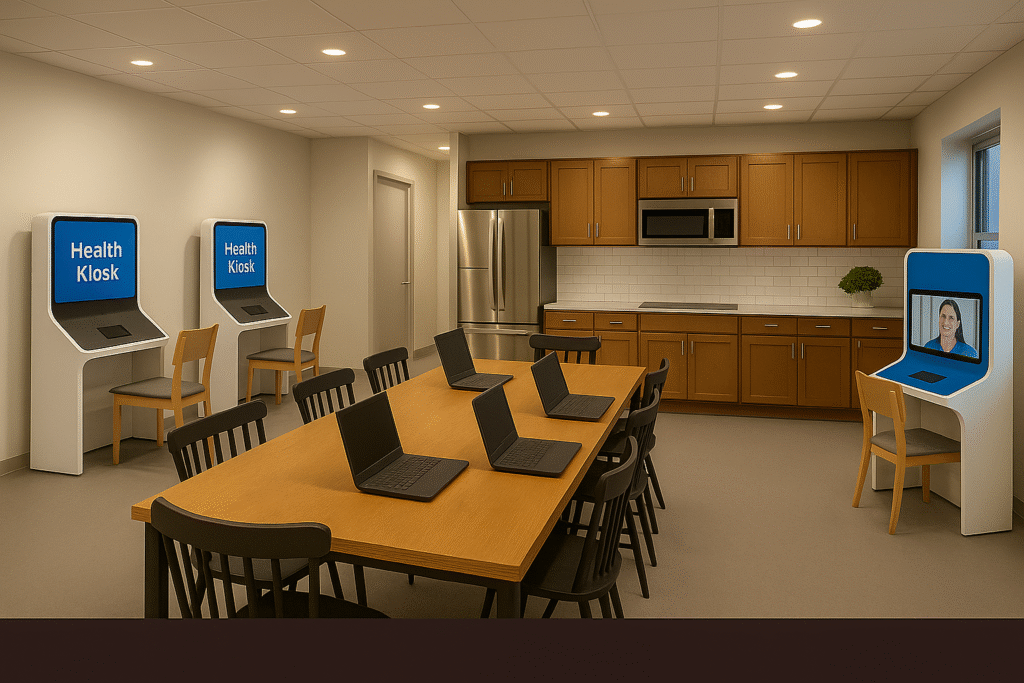
Including a healthcare component within the Afree mixed-use building’s community center is vital because it brings essential health services directly into the heart of the community, eliminating barriers like transportation, cost, and access. Many Black and underserved communities face systemic healthcare disparities, from chronic illness to mental health stigma, and local, accessible care helps close these gaps. Health kiosks and telemedicine stations empower residents to take control of their wellness through preventative care, screenings, and virtual consultations reducing ER visits and improving long-term health outcomes. Integrated healthcare in the community center also fosters trust, encourages education about holistic well-being, and creates a one-stop hub where residents can meet their housing, economic, educational, and health needs in one safe, supportive space. This approach aligns with Afree’s mission to build not just housing, but thriving, sustainable, and equitable communities.

Health workshops with mixed-age cohorts are powerful because they create spaces where learning, lived experience, and community care intersect. In Black and underserved communities especially, health knowledge is often passed down through family and community networks. By bringing together elders, adults, and youth, workshops tap into this natural flow of wisdom and encourage shared responsibility for wellness. Younger participants bring fresh perspectives and questions about modern health issues and technologies, while older participants offer cultural context, lived experience, and traditional practices. This intergenerational exchange fosters empathy, breaks down stigma around sensitive topics like mental health or chronic disease, and strengthens communal bonds. Mixed-age workshops also reflect real-life community dynamics, where health outcomes improve when all generations work together to create supportive environments. This approach empowers whole families and neighborhoods not just individuals to take collective action for better health.
I have been playing online slots for years and this place truly stands out with its smooth gameplay and fair wins. The customer support team actually listens and helps you enjoy every spin. I love how straightforward everything feels here. Check it out at wincasinochile